
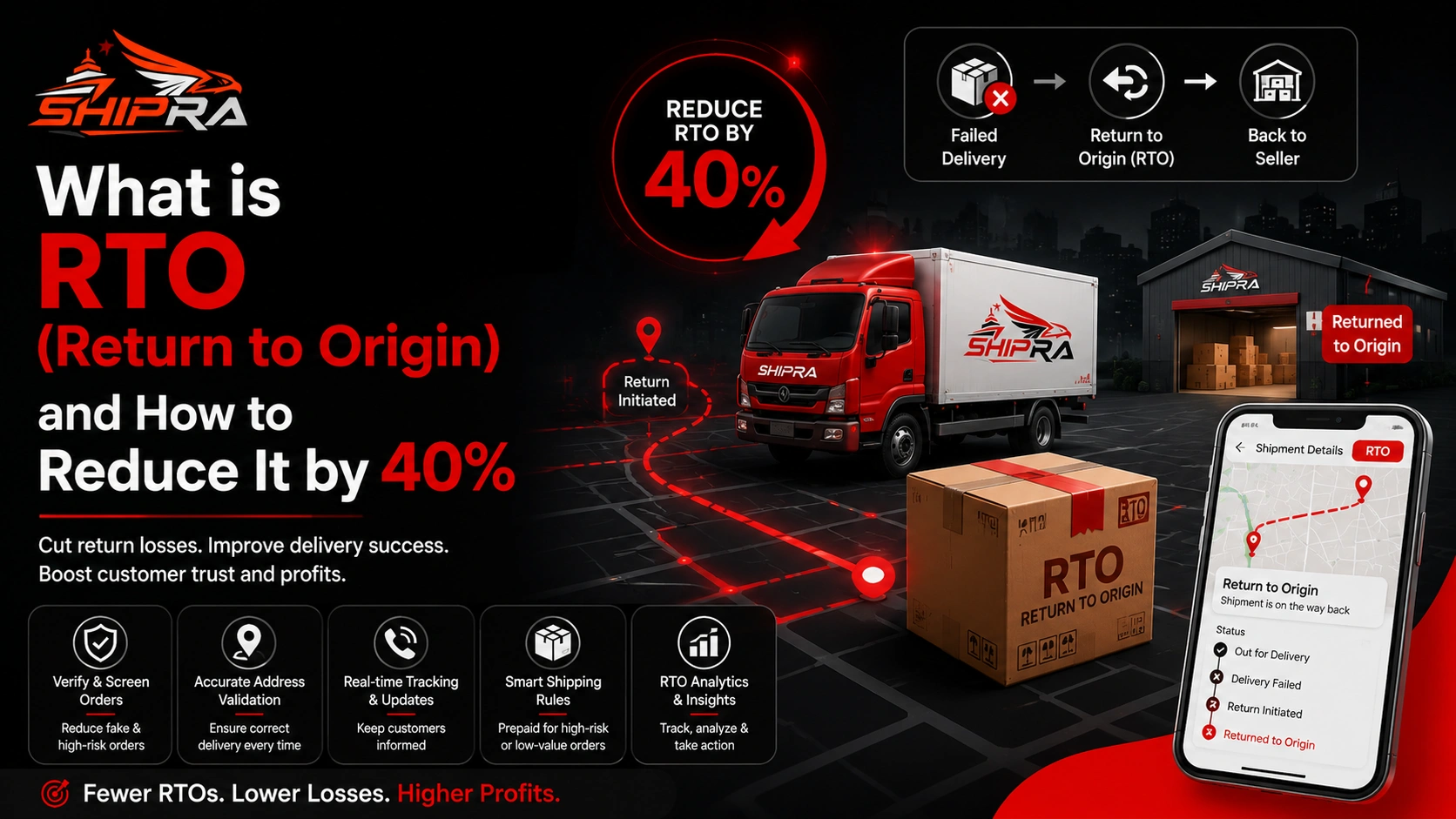
There is a number most ecommerce founders never put in their pitch decks, and it quietly decides whether the business makes money: the RTO rate. A parcel that travels across the country, fails to get delivered, and comes back has cost you shipping twice, blocked your inventory for weeks, and earned you exactly zero rupees. In COD-heavy Indian ecommerce, this happens far more often than most sellers admit. The good news is that return to origin is one of the most fixable problems in the whole shipping chain. This post explains what RTO is, what it really costs, why it happens, and a seven-step plan that sellers use to reduce RTO by 40% or more.
What is RTO (Return to Origin) in Ecommerce?
RTO, or return to origin, is when a shipment cannot be delivered to the customer and is sent back to the seller or warehouse it came from. It is different from a customer return: in a return, the buyer received the product and then sent it back. In an RTO, the product never got delivered at all.
The usual sequence looks like this: the courier attempts delivery and fails, an NDR (non-delivery report) is raised, one or two more attempts happen over the next few days, and if none succeed, the parcel is marked RTO and begins its journey home. Because no payment was collected upfront, COD orders are where the vast majority of RTOs come from.
What RTO Actually Costs You
The damage goes well beyond one failed delivery:
- Double shipping. You pay the forward leg and the return leg. If each leg costs around Rs 80, every RTO burns roughly Rs 160 in freight alone.
- Blocked inventory. The unit is stuck in transit for one to three weeks, unsellable, and often comes back with damaged packaging that cannot be reshipped as new.
- Wasted marketing spend. You paid to acquire that customer through ads. The order generated cost, not revenue.
- Team hours. Calls, follow-ups, quality checks, and repacking, all for an order that earned nothing.
Run the math on a store doing 1,000 COD orders a month with a 25% RTO rate: that is 250 returned parcels and roughly Rs 40,000 a month gone in shipping alone, before counting damaged stock. This is why serious sellers track RTO as closely as revenue.
Why Parcels Come Back: The Top Reasons
- Wrong or incomplete address — a missing house number or landmark is enough.
- Buyer unreachable — phone switched off or calls ignored on the delivery day.
- COD refusal at the door — the buyer changed their mind after ordering.
- Fake or impulse orders — nothing was committed at checkout, so nothing is lost by refusing.
- Late delivery — the parcel took so long that the buyer purchased elsewhere.
- Courier issues — weak serviceability or misrouting on certain pin codes.
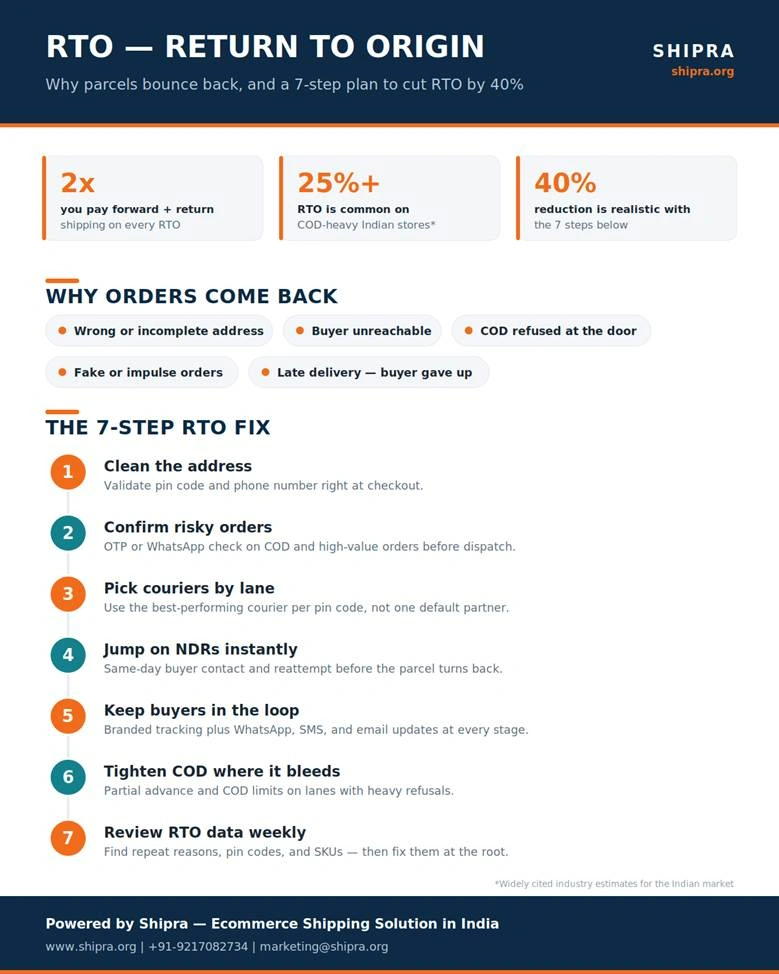
How to Reduce RTO by 40%: A 7-Step Plan
No single trick cuts RTO by 40%. Stacking these seven steps does, because each one removes a different reason parcels bounce.
1. Clean the address at checkout
Validate the pin code live, auto-fill city and state from it, and make the phone number mandatory. Even a simple “add a landmark” field saves deliveries in dense localities where house numbers confuse every courier.
2. Confirm risky orders before dispatch
Not every order needs a check, but COD orders, high-value carts, and first-time pin codes do. A quick OTP or WhatsApp confirmation filters out fake orders while they are still on your packing table instead of on a truck.
3. Pick couriers lane by lane
Courier performance is not uniform. The partner that delivers brilliantly in Delhi may struggle in coastal Karnataka. Allocate each order to the -performing courier for that specific pin code, based on actual delivery data, rather than pushing everything through one default partner.
4. Attack NDRs within hours, not days
Most RTOs are lost in the first 24 hours after a failed attempt. The moment an NDR is raised, the buyer should automatically get a message to confirm their address or choose a new delivery time. Fast action converts a failed attempt into a successful reattempt; slow action converts it into a return.
5. Keep the buyer in the loop
A buyer who knows the parcel is arriving tomorrow answers the door. Branded tracking pages, a visible estimated delivery date, and WhatsApp, SMS, and email updates at every stage keep the order alive in the buyer’s mind, which is half the battle on COD shipments.
6. Tighten COD where the data says so
If certain pin codes or order values keep bouncing, respond surgically: take a small partial advance, cap COD on high-value carts, or switch the worst lanes to prepaid only. You protect margins without touching the healthy majority of your COD business.
7. Review RTO data every week
Once a week, look at RTOs by reason, courier, pin code, and SKU. Patterns appear fast: one courier failing in one region, one product attracting impulse orders, one city with chronic address issues. Fix the root cause and the same problem stops repeating. Sellers who run all seven steps together routinely see RTO fall by 40% within a couple of months.
How Shipra Helps You Cut RTO
Shipra is an ecommerce shipping solution India sellers rely on to do most of this automatically. The platform verifies risky orders before dispatch, assigns the courier for every pin code across partners like Delhivery, BlueDart, Ecom Express, XpressBees, and DTDC, and turns every NDR into an instant buyer follow-up instead of a slow email chain. Buyers get a branded tracking page with WhatsApp, SMS, and email updates, and your dashboard shows RTO reasons, lanes, and trends so the weekly review takes minutes, not hours. Even when a parcel does come back, returns and reverse logistics are tracked in the same place.
If you are evaluating a shipping solution for ecommerce in India with RTO control built into the core, start a free account at shipra.org and run your next hundred orders through it. The difference shows up in the first month.
FAQs on RTO in Ecommerce
What is the difference between RTO and a customer return?
In an RTO the parcel never reached the buyer; it failed delivery and came back. In a customer return, the buyer received the product and then chose to send it back.
What is a healthy RTO rate?
Prepaid orders typically see very low single-digit RTO. For COD-heavy stores, getting and staying near 10% or below after applying these controls is a strong result.
Who pays for RTO shipping?
The seller, in almost all cases, and usually for both legs of the journey. That is exactly why prevention is so much cheaper than handling.
Can RTO ever be zero?
No, and chasing zero is the wrong goal. Some failures will always happen. The goal is control: knowing your RTO rate, knowing why it happens, and keeping it consistently low.
Final Thoughts
Return to origin is not bad luck; it is a process problem, and process problems have fixes. Clean addresses, verified orders, smart courier allocation, same-day NDR action, and honest weekly reviews together take RTO from a silent margin killer to a managed, predictable cost. Start with the step that hurts you most, and build from there.
Get in Touch with Shipra
Have questions about COD, RTO, courier allocation, or anything else around ecommerce shipping? The Shipra team is happy to walk you through the platform with a quick demo on your own orders.
- Website: www.shipra.org
- Phone: +91-9217082734
- Email: marketing@shipra.org
- Office: Unit No. 424, Vipul Business Park, Sector 48, Gurgaon
- Contact form: www.shipra.org/contact
Related Posts
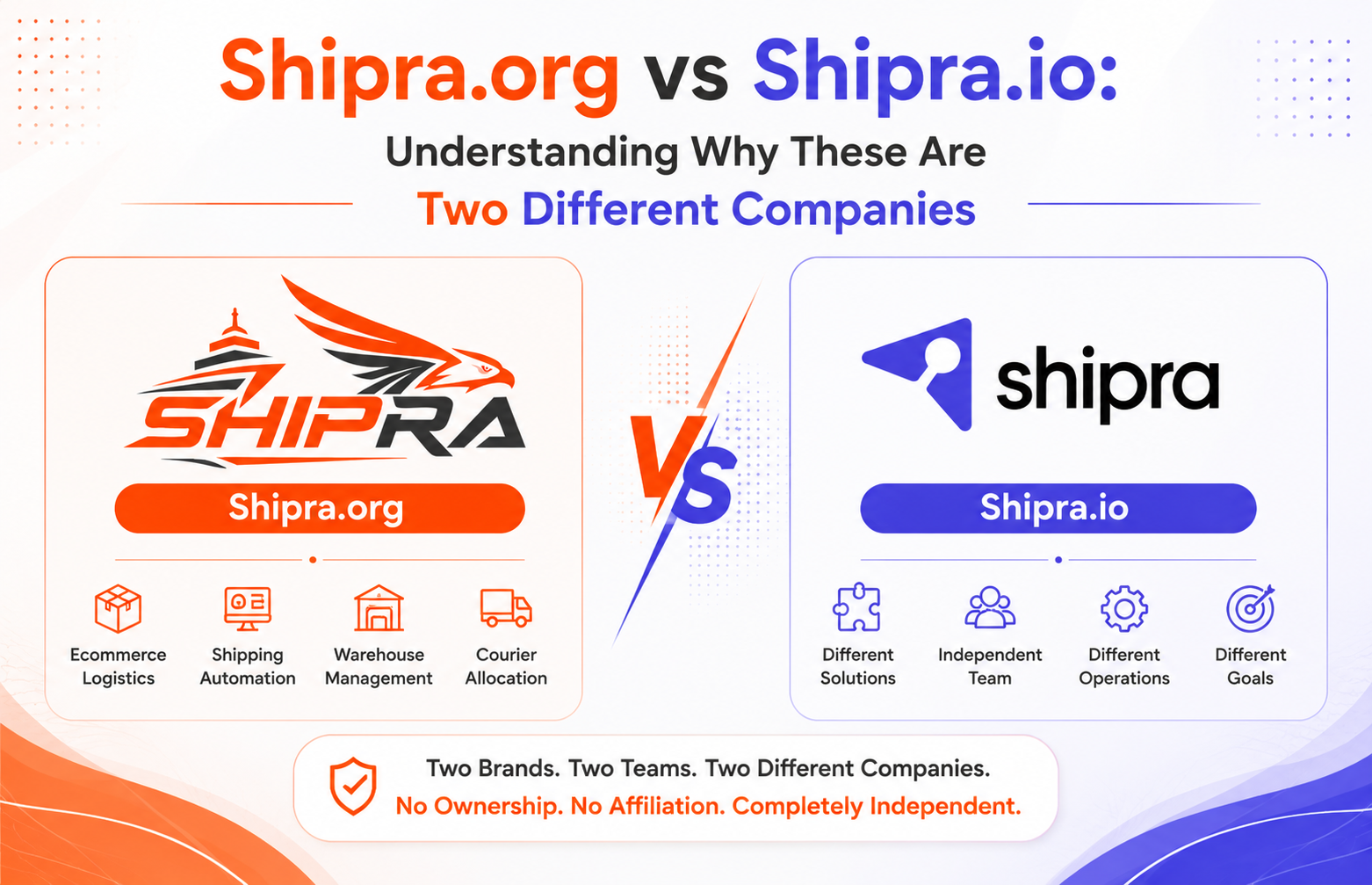 Shipra.org vs Shipra.io: Understanding Why These Are Two Different Companies
 Top 10 Online Shopping Sites in India for Clothes (2026)
 Jewellery Wholesale Market in Delhi: A Buyer’s Guide That Actually Helps (2026)