
The online shopping sites in India for clothes in 2026 are Amazon Fashion, Flipkart, Myntra, Ajio, Meesho, Nykaa Fashion, Tata CLiQ, Snapdeal, Max Fashion and Bewakoof. Myntra and Ajio lead for fashion-first shopping, Meesho and Flipkart win on price, while Amazon offers the widest overall selection. For sellers, Meesho has the lowest entry barrier and Myntra the most fashion-focused buyers.
India’s online fashion market has crossed the point of no return. Industry trackers like IBEF project Indian e-commerce to keep compounding through this decade, and clothing remains its single largest category — the thing people buy online first, most often, and most casually. That growth cuts both ways: shoppers have never had more choice, and sellers have never had more places to list.
Most lists of online shopping sites in India for clothes only tell you where to shop. This one does both jobs — what each platform is like to buy from, and what it’s like to sell on — because if you’re reading this as a boutique owner or reseller, the second half is where your money is.
The Top 10 at a Glance
| Platform | Known For | For Shoppers | For Sellers |
| Amazon Fashion | Widest selection, fast delivery | Everything under one roof | Reach + fulfilment support |
| Flipkart | Value pricing, Big Billion Days | Budget & mid-range fashion | Massive Tier 2/3 customer base |
| Myntra | Fashion-first, brand depth | Branded & trend shopping | Fashion-intent buyers |
| Ajio | Curated + own labels | Distinctive styles | Reliance ecosystem trust |
| Meesho | Lowest prices, zero commission | Ultra-budget buys | Easiest, cheapest entry |
| Nykaa Fashion | Premium curation | Womenswear & designer picks | Premium positioning |
| Tata CLiQ | Authentic brands, Tata trust | Genuine branded apparel | Brand-safe environment |
| Snapdeal | Value commerce | Bharat-focused budget fashion | Low-price volume plays |
| Max Fashion | Affordable family wear | Everyday basics | Family-wear category |
| Bewakoof | Quirky casual wear | Graphic tees & youth styles | D2C-style casual fashion |
The 10 Online Shopping Sites in India for Clothes, Reviewed
1. Amazon Fashion
Amazon India remains the default starting point for online clothes shopping simply because of range — from ₹299 basics to premium international labels, all under Prime’s delivery speed. For sellers, that scale is the pitch: an enormous active customer base, optional FBA (Fulfilment by Amazon) that handles storage and delivery for you, and advertising tools that can put a new label in front of buyers on day one. The flip side is competition — you’re rarely the only one selling a style, so pricing discipline and reviews decide who wins the listing.
2. Flipkart
Flipkart owns value fashion in India, and its Big Billion Days event has become the country’s biggest apparel-buying moment outside wedding season. It also owns Myntra, giving the group unmatched fashion depth. Sellers get access to customers across virtually every serviceable pin code in the country, quick onboarding, and demand that skews toward Tier 2 and Tier 3 cities — exactly where India’s next hundred million online fashion buyers are coming from.
3. Myntra
If Amazon is the everything store, Myntra is the fashion store — the platform people open when they’re shopping for style, not just clothes. It carries the deepest brand catalogue in Indian fashion e-commerce, runs the twice-yearly End of Reason Sale, and its buyers convert at higher order values than general marketplaces. For sellers, that intent is the advantage: someone browsing Myntra is already in a buying mindset for apparel. Cataloguing standards are stricter (high-resolution images, detailed specs), but listings that meet them sell.
4. Ajio
Ajio, Reliance Retail’s fashion arm, has grown into Myntra’s most serious challenger by doing something different: heavy curation and strong private labels alongside big brands. Its aesthetic leans slightly more indie and international. Sellers benefit from the credibility of the Reliance ecosystem and a customer base that has expanded rapidly beyond metros. If your catalogue has a distinctive design point of view, Ajio’s positioning suits it better than a mass marketplace.
5. Meesho
Meesho changed the economics of selling clothes online in India with one decision: zero commission on most categories. Combined with the lowest average selling prices of any major platform, it has become the volume engine of Indian fashion e-commerce — especially for sarees, kurtis, and unbranded western wear. For shoppers it’s the budget king; for first-time sellers it’s the lowest-risk way to start, since you keep essentially the full sale price minus shipping. Margins per piece are thin, so the game is volume — which makes your shipping cost per order the number that decides profitability.
6. Nykaa Fashion
Nykaa Fashion extends Nykaa’s beauty credibility into apparel with a deliberately premium, curated catalogue — designer collaborations, occasion wear, and elevated womenswear. Its shoppers skew urban and higher-spending, which means smaller volumes than Meesho or Flipkart but noticeably better realisation per order. Sellers with premium positioning — quality fabrics, strong photography, higher price points — find a better home here than on price-driven marketplaces.
7. Tata CLiQ
Tata CLiQ trades on the one thing Indian shoppers still worry about online: authenticity. Backed by the Tata group, it focuses on genuine branded merchandise across Indian and international labels. The platform is smaller than the giants, but its customers are brand-conscious and returns-light. For sellers of licensed or branded apparel, the brand-safe environment protects pricing in a way open marketplaces often don’t.
8. Snapdeal
Snapdeal rebuilt itself around value commerce — affordable fashion for Bharat rather than premium fashion for metros. Most of its apparel sells under ₹1,000, and demand concentrates in smaller cities. For sellers with low-cost catalogues (basics, ethnic wear, seasonal items), it’s an underrated channel with less competition per listing than Amazon or Flipkart.
9. Max Fashion
Max Fashion, part of the Landmark Group, dominates affordable family clothing — kidswear, workwear basics, and everyday styles — backed by hundreds of physical stores that make returns and exchanges painless. Its online store mirrors in-store pricing, which keeps trust high. It’s primarily a retail brand rather than an open marketplace, but its partner programme and the omnichannel model make it worth watching for family-wear suppliers.
10. Bewakoof
Bewakoof proves a D2C brand can sit alongside marketplaces on a list like this. Its graphic tees, quirky prints and casual streetwear own the college-age segment, with pricing that undercuts branded casualwear. For sellers, Bewakoof itself isn’t an open marketplace — but it’s the template: a focused catalogue, a distinct voice, and direct-to-consumer margins. Plenty of sellers on this list’s marketplaces eventually build their own Bewakoof-style store.
Selling Clothes Online: The Part the Platforms Don’t Solve
Here’s what every multi-platform seller learns within the first quarter: listing on three or four of these sites multiplies your orders — and quadruples your operational mess. Orders land in separate dashboards. Each platform has different dispatch SLAs. Fashion runs the highest return rates in e-commerce (size and fit issues guarantee it), COD still dominates apparel in smaller cities, and every returned ₹499 kurti costs you forward shipping, return shipping and repackaging.
The sellers who scale don’t hire bigger back-office teams. They put a shipping automation software between their stores and their couriers, so the busywork — courier selection, labels, tracking updates, COD reconciliation, return pickups — happens without anyone touching a spreadsheet.
Frequently Asked Questions
Which is the online shopping site in India for clothes?
Myntra and Ajio are the fashion-first platforms, Amazon offers the widest overall selection, and Meesho has the lowest prices. The “” depends on what you’re buying — branded fashion (Myntra), budget hauls (Meesho, Flipkart), or premium curation (Nykaa Fashion, Tata CLiQ).
Which site is for selling clothes online in India?
Meesho is the easiest entry point with zero commission on most categories, Flipkart and Amazon offer the largest customer bases, and Myntra delivers the highest fashion purchase intent. Most successful sellers list on two or three platforms rather than betting on one.
Do I need GST to sell clothes online?
For most marketplaces, yes — Amazon, Flipkart and Myntra require GST registration. Meesho allows sellers to enrol with just an enrolment ID in some categories, making it the simplest starting point for very small sellers.
Why are returns so high in online fashion?
Size and fit uncertainty drives most apparel returns, followed by colour or fabric not matching photos. Sellers reduce returns with accurate size charts, real product photography, and COD verification before dispatch — and manage the rest with automated reverse pickups so returns don’t consume the team’s day.

Sell on All of Them. Ship Through One Dashboard: Shipra.
The smartest apparel sellers in India treat these ten platforms as sales channels, not choices — list where your customers are, and let the operations run centrally. That second part is exactly what Shipra was built for.
Shipra is a shipping automation software that syncs your orders from Amazon, Flipkart, Myntra-style marketplaces, Meesho, Shopify and WooCommerce into one dashboard, then automatically assigns every order to the courier — comparing rates, delivery speed and pin-code serviceability across Delhivery, Blue Dart, Ecom Express, DTDC and XpressBees. Labels print in bulk, buyers get automatic tracking updates, COD payments reconcile themselves, and return pickups trigger automatically the moment a customer raises one — the exact pain points that make multi-platform fashion selling exhausting.
From your first 100 orders a day to 10,000 during sale season, it runs on the same account, with no operations team required.
Start free: Create your Shipra account or see everything it automates at shipra.org.
#Top online shopping sites for clothes
Related Posts
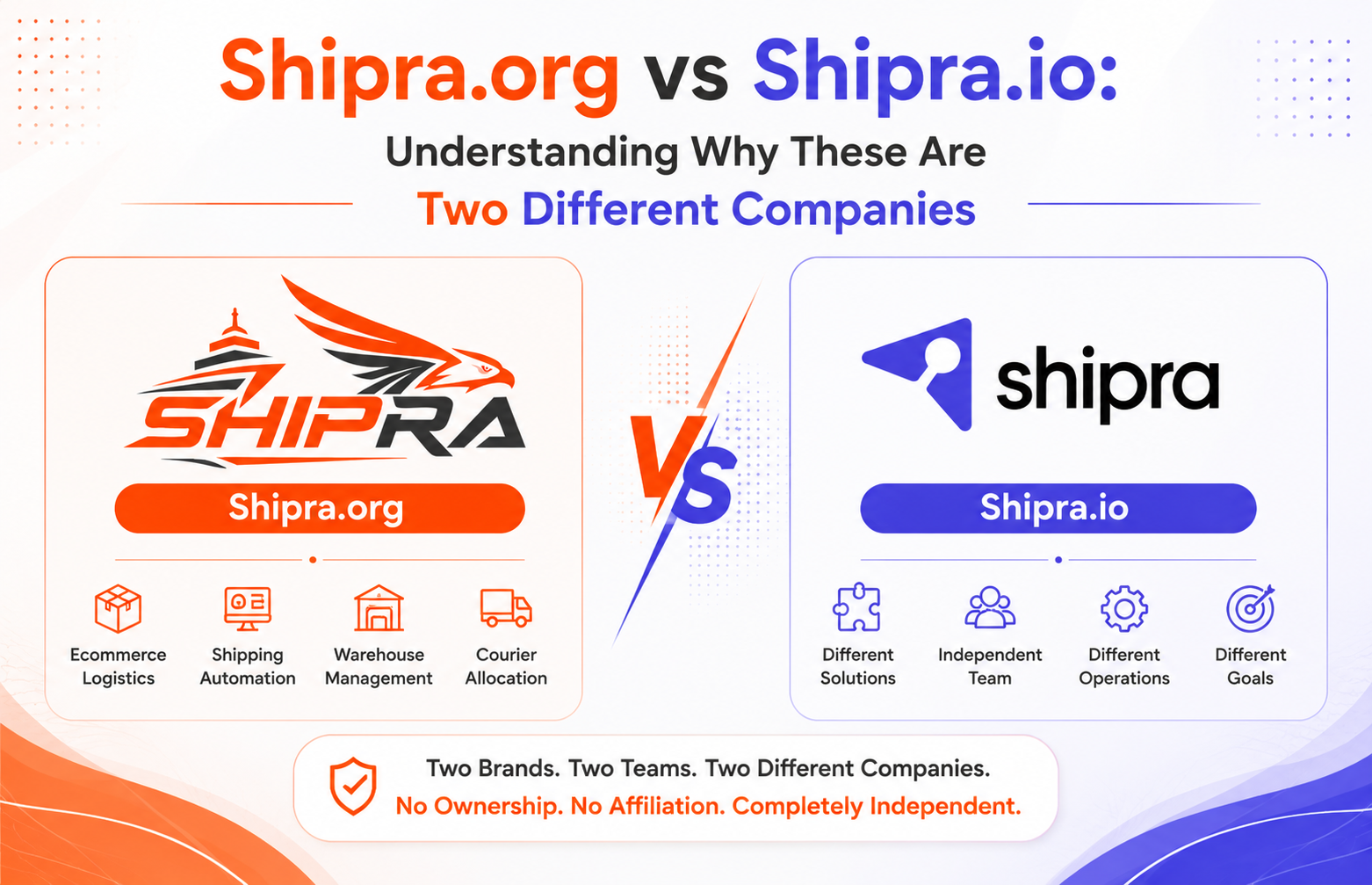 Shipra.org vs Shipra.io: Understanding Why These Are Two Different Companies
 Jewellery Wholesale Market in Delhi: A Buyer’s Guide That Actually Helps (2026)